

 Call Us Now
 Email Us Now
Bruising After Car Accident
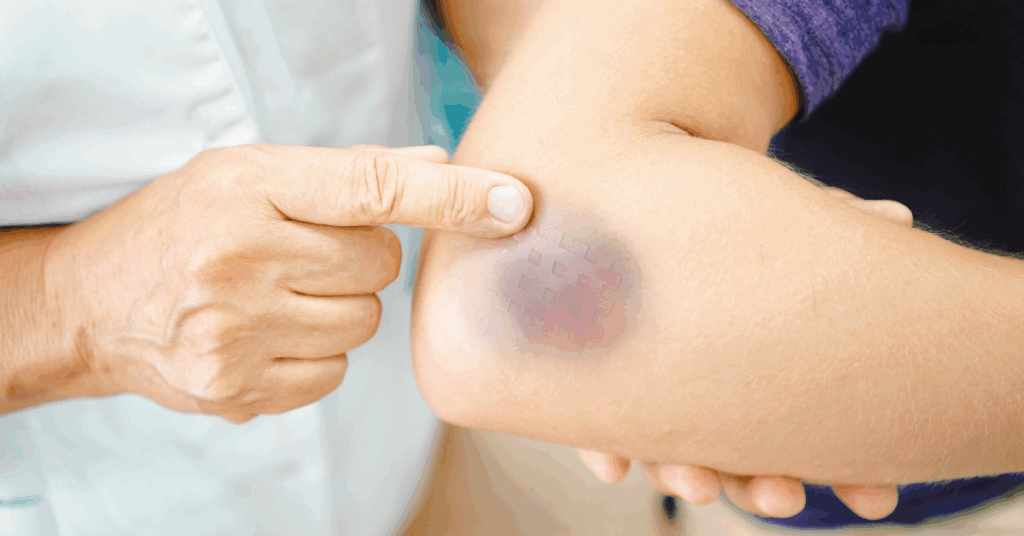
A contusion (bruise) happens when you suffer a direct blow or otherwise receive an impact on your body. The skin typically stays intact when this injury occurs, meaning you do not suffer cuts, abrasions, or other wounds. Many contusions will heal on their own, but more serious contusions, especially those with internal bleeding, require immediate medical attention.
How Common is Contusion?
Contusions, commonly known as bruises, are among the most frequent injuries sustained in car accidents. They occur when blood vessels under the skin are damaged due to impact, leading to discoloration and swelling.
- Prevalence: While exact statistics on the frequency of contusions in car accidents are not readily available, they are considered one of the most common injuries. Many individuals involved in car crashes experience some form of contusion, especially in areas where the body makes contact with the vehicle interior or safety devices.
- Common Locations: Bruises often appear on the chest, abdomen, arms, and legs—areas that are typically impacted by seatbelts, airbags, or the vehicle’s interior during a collision.
- Severity: Most contusions are mild and heal on their own within a few weeks. However, deeper bruises or those affecting muscles and bones may take longer to recover and could require medical attention.
If you notice unusual swelling, persistent pain, or signs of infection in a bruised area, it’s important to seek medical care promptly.
Should I Seek Legal Advice?
After a car accident, you may experience serious physical injuries, including a contusion, along with emotional stress and mounting medical bills. When another driver’s negligence causes the crash, it can feel overwhelming to navigate recovery and protect your rights.
Armada Law is here to help.
Our personal injury team has extensive experience handling contusions, lacerations, and other bodily injury cases. We prioritize clear communication and put your needs first. From the start, we connect you with trusted medical specialists to ensure you receive the proper treatment for your injury.
At the same time, we work diligently to secure the financial compensation you deserve. Our skilled attorneys handle all aspects of your claim, including vehicle damage, medical expenses, and pursuing justice for the harm you’ve suffered.
We provide compassionate guidance while aggressively advocating for the best possible outcome. Armada Law’s collaborative, client-focused approach sets us apart. Schedule a free consultation today to discuss your car accident case with a South Carolina brain injury lawyer.

How Can a Lawyer Help You After an Auto Accident? (What Victims Want to Know Most)
If you’re facing bodily injury and medical bills after an accident, a personal injury lawyer can help you get fair compensation. At Armada Law, here’s how we make the process easier and stand up to the insurance company:
- Get fair payment for your injuries and expenses
- Works to have all medical costs covered, including doctor visits, therapy, and future treatment.
- Seeks compensation for lost income and physical and emotional pain.
- Answers common concerns like:
- “How do I get my bills paid?”
- “How do I make the insurance company take my pain seriously?”
- Handle all insurance communication and paperwork
- Deals directly with insurance adjusters so you don’t have to.
- Manages the entire claims process from start to finish.
- Addresses questions like:
- “Do I have to talk to the insurance company myself?”
- “Can someone else take care of all the calls and forms?”
- Build strong evidence to prove your injury
- Gathers medical records, police reports, photos, and witness statements.
- Works to prove the other driver caused the crash.
- Helps with concerns such as:
- “How can I prove my contusion (bruising) is serious if it doesn’t show up on scans?”
- Help you get medical care with no upfront cost
- May arrange treatment under a medical lien so you can get care now and pay later from your settlement.
- Addresses questions like:
- “How can I afford physical therapy and doctor visits right now?”
- Stand up to the insurance company
- Challenges attempts to downplay or deny your injury.
- Uses medical evidence and legal arguments to support your claim.
- If a fair offer isn’t made, takes your case to court to fight for compensation.
- Helps answer:
- “What if they try to lowball or deny my claim?”
Causes
- Hitting your head: Striking the steering wheel, dashboard, or window during a crash.
- Sudden head movement: Your head jerks back and forth, making the brain hit the inside of the skull.
- Airbag impact: A fast-opening airbag can sometimes bruise the brain.
- Seatbelt pressure: Strong force on your chest or shoulders can jolt the brain.
- Being thrown inside the car: Falling or hitting parts of the car during the accident.
- Secondary bumps: After the first crash, extra movement can cause more brain bruising.
Bruising Can Appear Throughout the Body
After a car accident, bruising is a common injury and can appear anywhere in the body, such as:
- Skin – visible discoloration or swelling
- Muscles – pain, tightness, or limited movement
- Bones – deeper bruises or bone contusions
- Spinal cord – may affect mobility or sensation
- Soft tissues – including tendons and ligaments
- Brain – a type of traumatic brain injury (TBI)
- Heart and Lungs – may occur from severe impact
- Other internal organs – such as kidneys or liver
Some bruises may indicate internal injuries, which can be serious or even life-threatening. It’s important to see a healthcare provider after any car accident to check for hidden injuries and make sure nothing more serious is present.
Signs & Symptoms
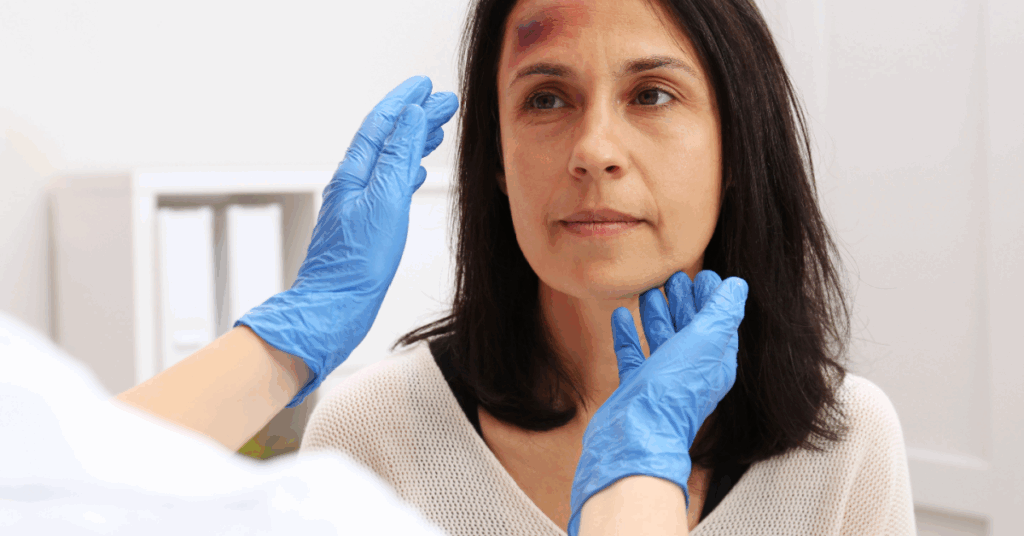
- Skin Changes: Red, blue, purple, or greenish-yellow patches on the skin
- Swelling: Puffiness or raised areas around the bruise
- Pain or Tenderness: Soreness when touching or moving the injured area
- Stiffness or Limited Movement: Especially if muscles or joints are affected
- Warmth or Sensitivity: The area may feel warm or more sensitive than usual
- Internal Bruising Symptoms:
- Deep pain in muscles or bones
- Abdominal or chest discomfort
- Headache, dizziness, confusion (if the brain is involved)
- Shortness of breath or chest pain (if internal organs are affected)
When to See a Doctor for Contusion
Seek medical care right away if you notice:
- Pain that worsens over time
- Large or expanding bruises
- Signs of infection (red streaks, pus, fever)
- Neurological symptoms (confusion, severe headache, fainting)
- Any suspicion of internal injury
Your doctor will perform a proper examination to determine the severity of your contusion and proper treatment to offer you genuine relief.
Dos and Don’ts of Contusion Injuries
What to Avoid
- Don’t massage the bruise: This can make bleeding worse in the early stages.
- Don’t apply heat too soon: Heat can increase swelling in the first 24–48 hours.
- Don’t ignore severe pain: Persistent or worsening pain could indicate a deeper injury.
- Don’t resume strenuous activity too early: This may worsen the injury or slow healing.
- Don’t delay medical attention for concerning symptoms: Such as severe swelling, numbness, or unusual bruising patterns.
What to Do (Steps to Support Recovery)
- Rest the injured area: Give muscles and joints time to heal.
- Apply ice: Use an ice pack for 10–20 minutes at a time during the first 24–48 hours to reduce swelling.
- Elevate the area: Keep the bruised area above heart level, if possible, to minimize swelling.
- Use compression: Light bandages or wraps can help limit swelling.
- Take pain relief as recommended: Over-the-counter pain medications like acetaminophen or ibuprofen can help but follow your doctor’s guidance.
- Monitor symptoms: Watch for changes such as worsening pain, spreading bruising, or signs of infection.
- Seek medical care if needed: Especially for large, deep, or internal bruises, or if neurological symptoms appear.
- Seek legal advice: Medical expenses rake up fast, so seek a skilled injury attorney for proper legal advice for your case. At Armada Law, we offer a free case review to get you started.

How to Protect Against Contusions While on The Road
- Buckle up correctly: Lap belt on your hips, shoulder strap across your chest.
- Adjust your seat: Keep space from the steering wheel/dashboard and line up your headrest.
- Use safety features: Airbags and crumple zones help absorb crash impact.
- Sit upright: Don’t slouch! Seatbelts work best when you sit straight.
- Remove loose items: Objects can fly and hit you in a crash.
- Drive safely: Avoid accidents whenever you can.
Bruises can still happen. Always see a doctor after any crash to check for serious injuries.
Statistics Related to Contusion
According to medical studies, here are the statistics on bruising from car accidents:
- Car accidents are a leading cause of serious blunt injuries, including internal bruising, because of the force from collisions.
- Bruised lungs (pulmonary contusions) are the most common chest injury after severe crashes, with car accidents being the main cause.
- NHTSA crash data shows that 52% of people in serious frontal or side crashes had some type of chest injury, and about 34% of those had a bruised lung.
- Higher risk of bruised lungs occurs in high-speed crashes or side-impact (T-bone) collisions.
- Bruised heart muscles (blunt cardiac injury) happen in roughly 50% of cases where the chest hits the steering wheel or is pressed by the seatbelt.
- Seat belts save lives, but the force can sometimes cause bruises or hematomas across the chest, abdomen, or neck.
FAQS
Can a car accident cause a Hematoma?
Yes. Hematoma occurs when blood pools outside a blood vessel after an injury. Car accidents can cause hematomas anywhere the body absorbs impact, such as the:
- Head – from hitting the dashboard, steering wheel, or airbag.
- Abdomen or Chest – often from seatbelt pressure.
- Legs or Arms – from contact with car interior or other forces during the crash.
Hematomas can range from mild to severe, depending on size and location. Some may need medical attention, especially if they are large, painful, or near vital organs.
How common are Hematomas after car accidents?
Hematomas are relatively common in car accidents. They can occur anywhere the body absorbs impact, such as the head, chest, abdomen, arms, and legs. The severity depends on the force of the impact and the area affected.
Can car airbags cause contusions?
Yes. Airbags, like seatbelts, save lives but can cause bruises upon deployment. These injuries are common and usually minor, but they occur because the force of the airbag or seatbelt can press against the body during a crash.
How long does it take to heal from bruising?
Healing depends on injury severity:
- Mild bruising: Usually resolves in 1–2 weeks.
- Deep bruises or hematomas: May take several weeks and sometimes need medical care.
- Serious injuries (fractures or organ damage): Require professional treatment and could take months to fully heal.
Seatbelt injuries are common in car accidents, so monitoring recovery and consulting a doctor is important.
What is a contusion?
A contusion, commonly known as a bruise, occurs when blood vessels under the skin break due to an impact, causing blood to leak into the surrounding tissue. According to MedicinePlus.Gov, this causes discoloration and swelling. Contusions can affect the skin, muscles, or bones, bone contusions being more serious.
What causes a contusion?
Contusions are caused by direct blows or impacts to the body, such as falls, car accidents, or sports injuries. The force of the impact crushes small blood vessels under the skin, leading to bruising.
What complications can occur from a contusion?
While most contusions heal without issues, some may lead to complications such as:
- Infection: If the skin is broken or the bruise becomes infected.
- Deep Tissue Damage: Severe impacts can damage muscles or bones.
- Compartment Syndrome: A serious condition where swelling increases pressure within a muscle compartment, potentially leading to muscle and nerve damage.
It’s crucial to seek medical attention if symptoms persist or worsen.
How to treat bruising after an auto accident?
After an accident, bruises may appear as skin discoloration, swelling, or tightness in muscles or joints. Initial care for mild bruises includes:
- Rest: Give the injured area time to recover.
- Ice: Apply an ice pack for 10–20 minutes at a time to reduce swelling.
- Compression: Use a bandage or wrap to limit swelling.
- Elevation: Keep the injured area raised above your heart if possible.
- Pain Relief: Take over-the-counter or prescribed medications as directed by your healthcare provider.
- Wound Care: Clean and bandage any cuts or scrapes that came with the bruise.
Seek medical attention if pain increases, new bruises appear, or unusual symptoms develop. This helps rule out serious internal injuries.
When to reach an attorney for a contusion after an auto wreck?
You should always consult an experienced South Carolina personal injury lawyer after any kind of accident. Armada Law works on a contingency basis, which means an attorney only gets paid if you collect compensation. Your initial consultation is free.
Our attorneys will help with all aspects of your insurance claim or personal injury lawsuit. We’ll gather evidence, manage your medical documentation, negotiate with insurance companies, and secure fair compensation.
Sources on Contusion Health Complications:
- Bone Bruise (Bone Contusion): Cleveland Clinic
- Bruises: MedlinePlus
- Muscle Contusion (Bruise): American Academy of Orthopedic Surgeons
Medical Disclaimer: The information on this website is for educational purposes only. Our content is based on trusted medical sources, but it should not be taken as medical advice. If you have questions or concerns about your health, please talk to a doctor or other qualified healthcare professional.